Short-Form Video: 2M Daily ViewsAcross mako, N12 & V1
The trust of the Keshet 12 newsroom, delivered in the swipeable video format users already loved, and monetized from day one.

I led the design of a short-form vertical video feed for Keshet 12, Israel's largest news and media organization, and shipped it across three products: the mako app and web, the N12 app and web, and a brand-new standalone app, V1. As the senior designer, working with one junior designer, three product managers, and their engineering and content teams, I ran the research, designed one player and feed consistent across all three brands, and created two new ad formats to make it profitable.
Designing Trust Into a Feed
News Was Losing to the Feed
Users had moved to TikTok and Instagram for quick, engaging video, but they didn't trust what they saw there. My research kept hitting the same wall: people loved the short-form format, then lost time fact-checking it against real news sites. Keshet had the trusted content, it just didn't have the format users now expected.
Studying the Format Before Building It
I interviewed 8 people who get their news mainly from social media, then affinity-mapped their habits, pain points, and feelings. In parallel I analyzed TikTok, Instagram Reels, and YouTube Shorts, plus the news organizations already doing this, to decide which patterns to borrow and which to leave.
“I'm just hoping for some solution that combines the reliability of traditional news sources with the engaging format of social media.”
The Viewer the Feed Was Built For
Consumes news as quick video between other things, on the train or after a push, and never fully trusts social sources.
- 01Reliable news in the fast video format they enjoy
- 02A clear line between trusted content and ads
- 03Depth on demand, without leaving the feed
Affinity mapping from 8 interviews, grouped into habits, pain points, strong quotes, inner feelings, and past experience.
Habits
Pain points
Strong quotes
Inner feelings
Past experience
4 Reasons News Was Losing to Social
Trust Doesn't Travel to Video
Users loved short-form video but couldn't trust social platforms, so they fact-checked everything against real news sites anyway.
Verification Is Exhausting
Cross-checking authenticity across apps was slow and draining, the opposite of the quick, easy format they came for.
News Apps Feel Like Work
Traditional news apps stayed text-heavy and formal, out of step with how people now expect to consume content.
Algorithm Bubbles
Social feeds optimized for engagement, not accuracy, leaving users in information bubbles they didn't trust.
Learning From Both Sides of the Feed
There was no shortage of short-form video to learn from. I split it into two camps: the social platforms that defined the format, and the news organizations already adapting it, then decided which patterns to borrow and which to leave behind.
- Social video platforms
- Full-screen vertical, swipe to next
- News orgs with short-form
- Mostly clips embedded in articles
- Social video platforms
- User-generated, unverified
- News orgs with short-form
- Newsroom-produced
- Social video platforms
- Algorithmic, engagement-maximizing
- News orgs with short-form
- Editorial selection
- Social video platforms
- Tap to pause, mute toggle, scrub bar
- News orgs with short-form
- Standard video player chrome
- Social video platforms
- In-feed and mid-roll ads
- News orgs with short-form
- Limited pre-roll
- Social video platforms
- None
- News orgs with short-form
- Masthead brand
Landscape synthesized from hands-on analysis of TikTok, Instagram Reels, and YouTube Shorts, and desk research on news organizations adopting short-form video. Both camps describe general patterns rather than individually audited products, and the publisher camp is characterised at category level only.
My note on the research board said it plainly: don't reinvent the wheel. Users already knew how to work a vertical video feed from TikTok and Reels, so I kept the core interaction identical (swipe, tap to pause, mute toggle) and spent my design effort on what was actually different here: trust, clarity, and honest monetization.
The branch happens at the teaser, not inside the player. A breaking-news teaser opens a Mivzakim feed and keeps serving breaking news; a regular teaser opens a regular one. What changes between them is the size of the title.
The Format Wasn't the Product. Trust Was.
Anyone could copy TikTok's mechanics. What no social platform could copy was a newsroom users already trusted. So I stopped treating this as a video feature and started treating it as a trust product: keep the familiar, effortless interaction people learned on social, but fill it with verified Keshet 12 content and make the ad boundary unmistakable. Familiar format, trusted source, honest monetization.
The Feed, Screen by Screen
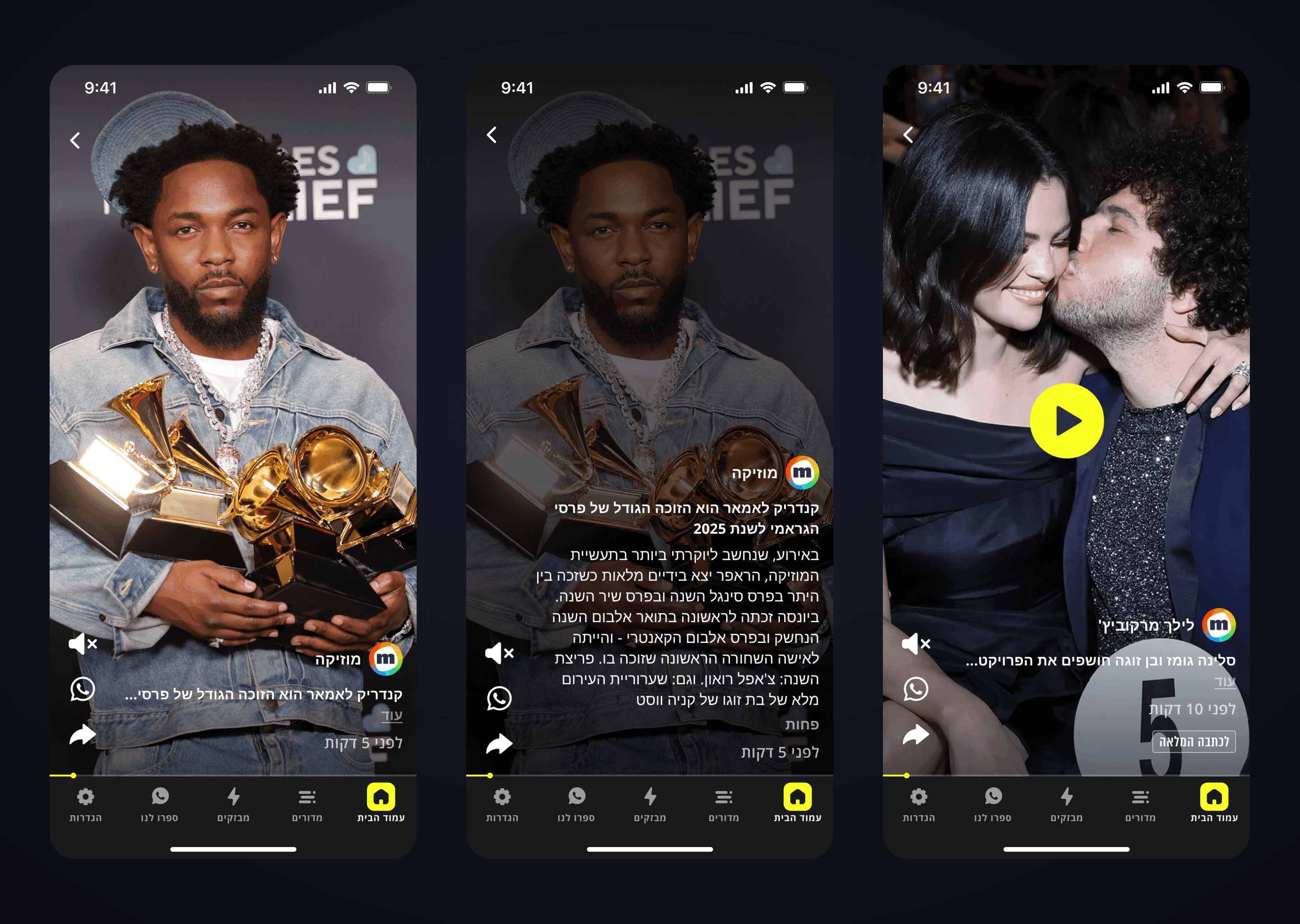
The Player: mako's trusted content in a feed users already know
- 1
Familiar by design
Mute, share, and the progress bar sit exactly where TikTok and Reels users already expect them, and a tap anywhere pauses.
- 2
Context over the video
Category, headline, and an expandable description under the video. The small type is deliberate, so the video keeps the room.
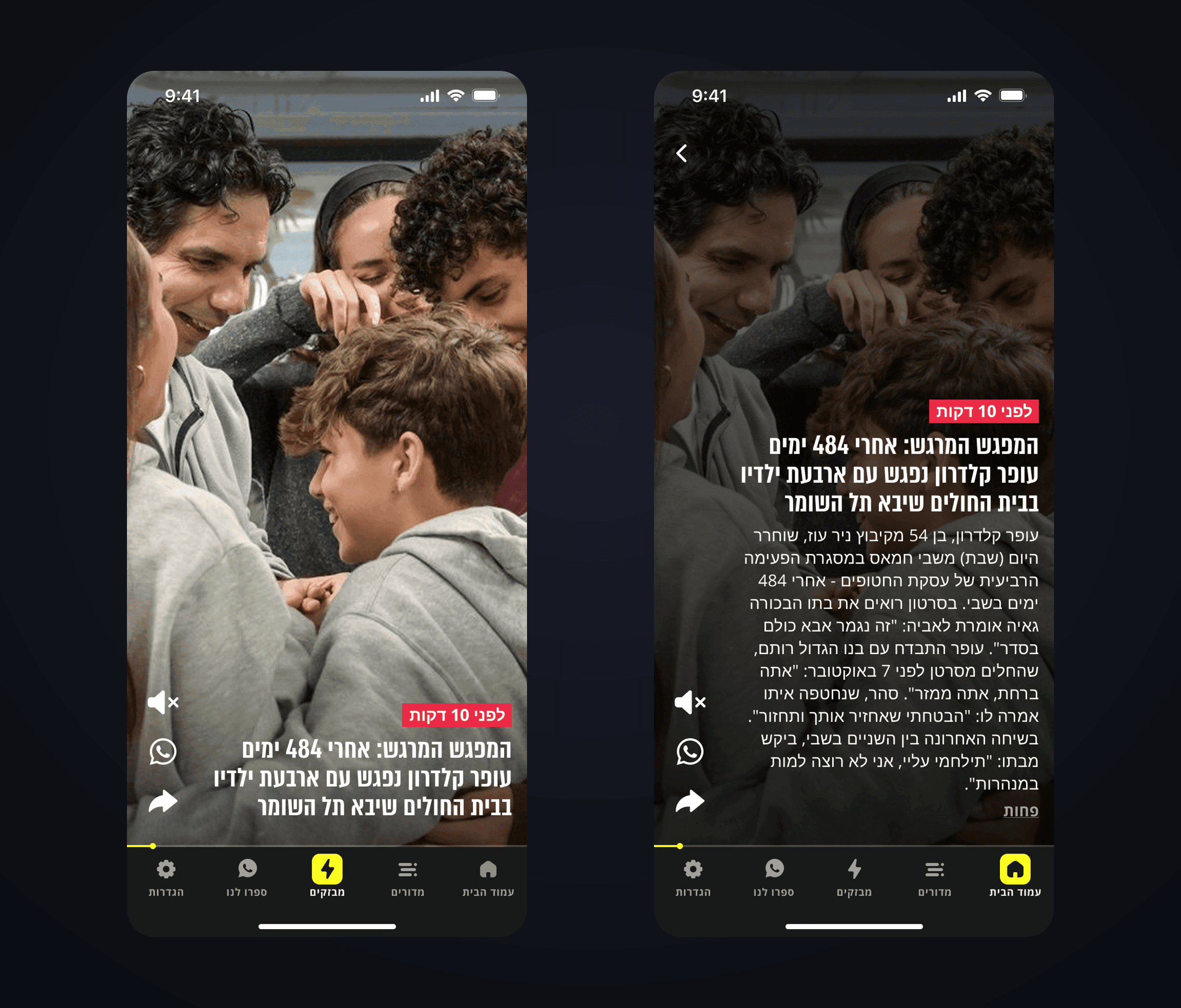
Breaking News: the same feed, tuned for urgency
- 1
Urgency, encoded
The title is much larger here. Breaking clips are often hard to follow alone, so the text outranks the video, and a red time stamp reinforces it.
- 2
Depth without leaving
One tap expands the full story in place, so nobody has to break out of the feed to find out what happened.
The type scale is the decision. Breaking news gets a big title because those clips are often hard to understand on their own, while regular content gets smaller text so the video keeps the room. Tapping a breaking-news teaser also keeps the whole feed on breaking news.
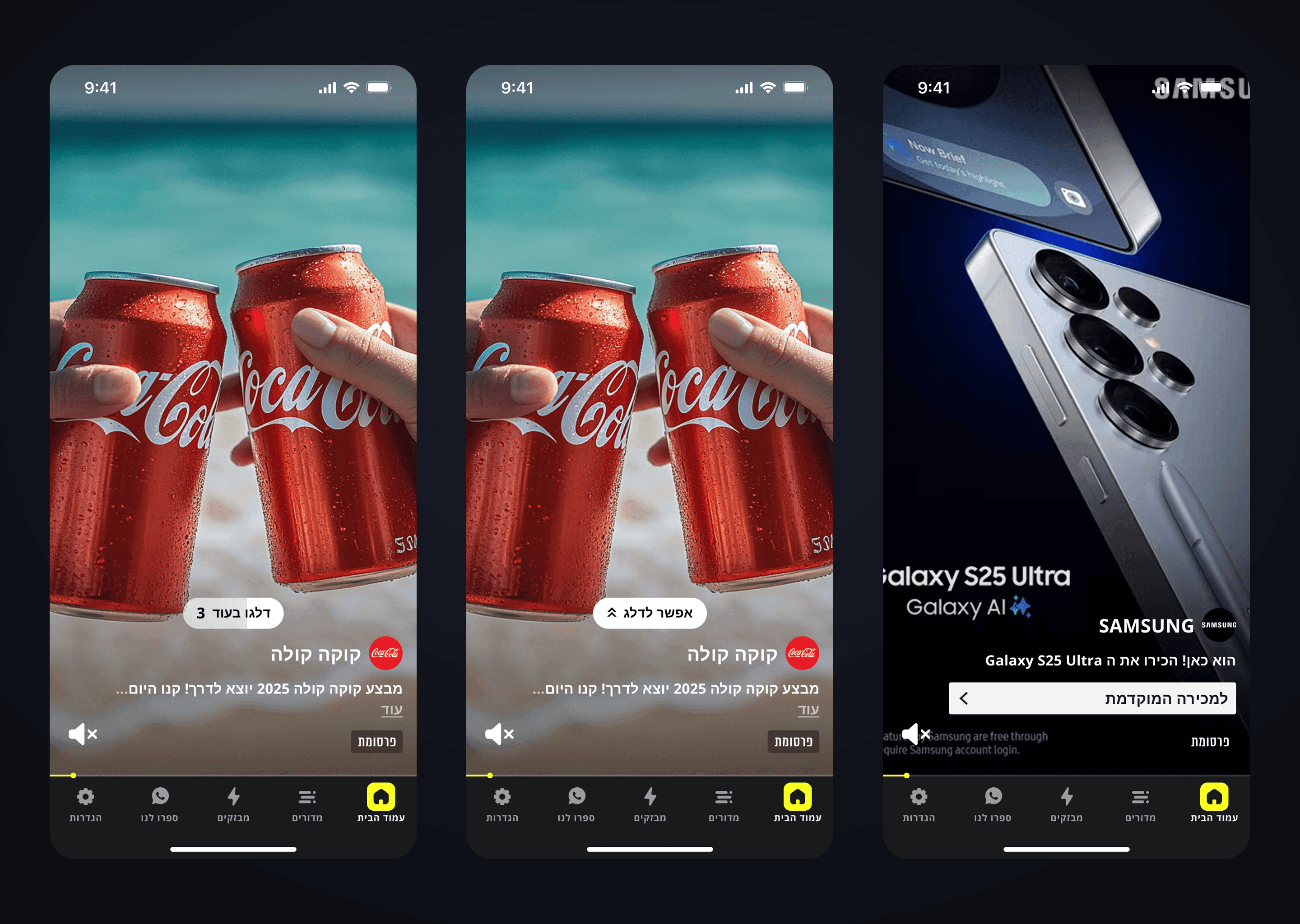
Two Ad Formats: making the feed profitable without spending its trust
- 1
A three-second lock
The Bumper holds the feed for three seconds, then hands control back. Session data showed no meaningful drop in videos watched per session.
- 2
Always obviously an ad
Brand, a sponsored label, and a single honest call to action. The commercial boundary stays visible, which is what protects the trust the feed is built on.
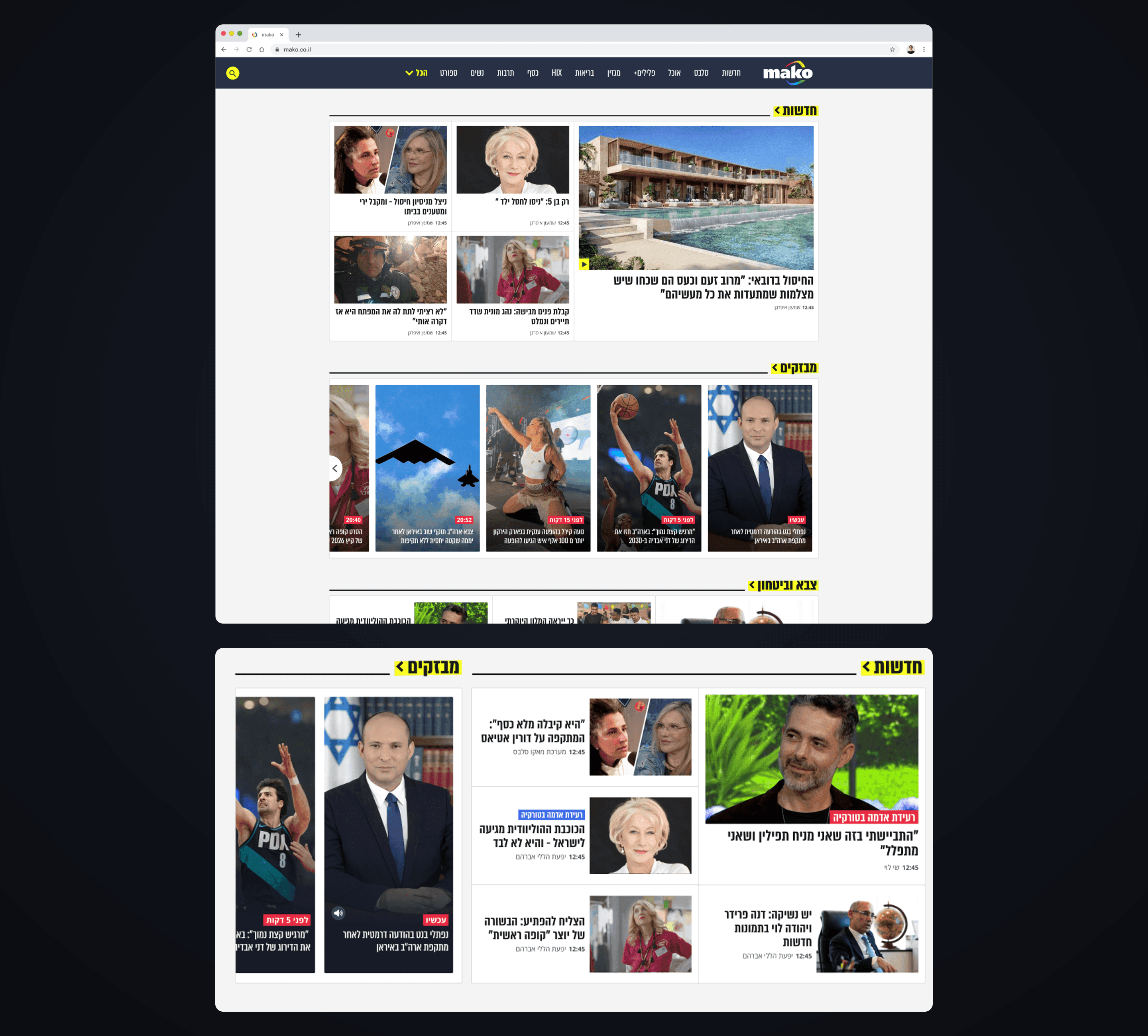
How Readers Find It: the feed sitting inside mako.co.il
- 1
A row, not a destination
The feed lives inside the homepage readers already visit, and every card states its length up front so the format reads as quick rather than open-ended.
- 2
Alive on arrival
The first video autoplays muted right there in the row, so the component moves instead of sitting on the page as another block of thumbnails.
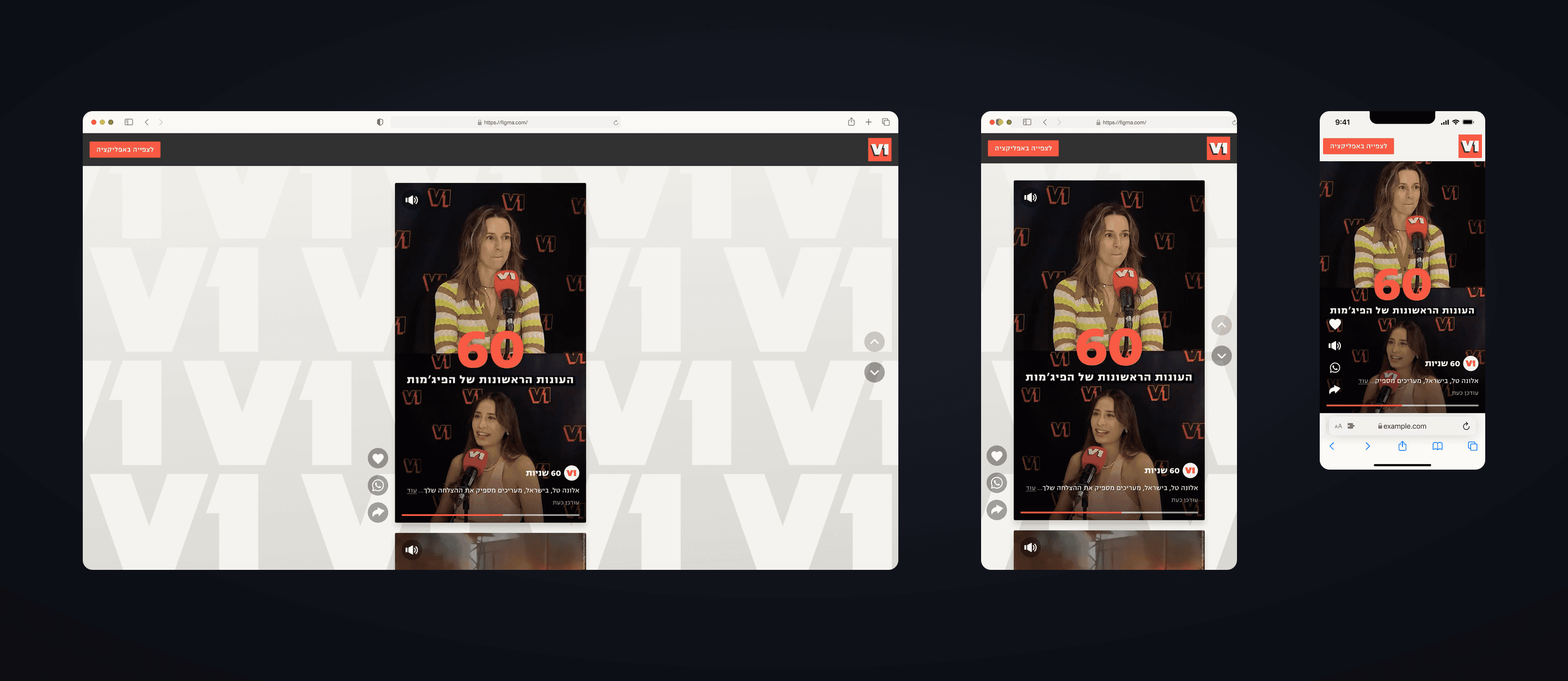
One Player, Every Breakpoint: V1 on desktop, narrow, and mobile web
- 1
The player never reflows
The vertical video column keeps its proportions at every width. What changes around it is the page, not the thing people came to watch.
- 2
Only the chrome adapts
The site header collapses to a hamburger and the browser chrome changes, while the feed and its controls stay exactly where users learned them.
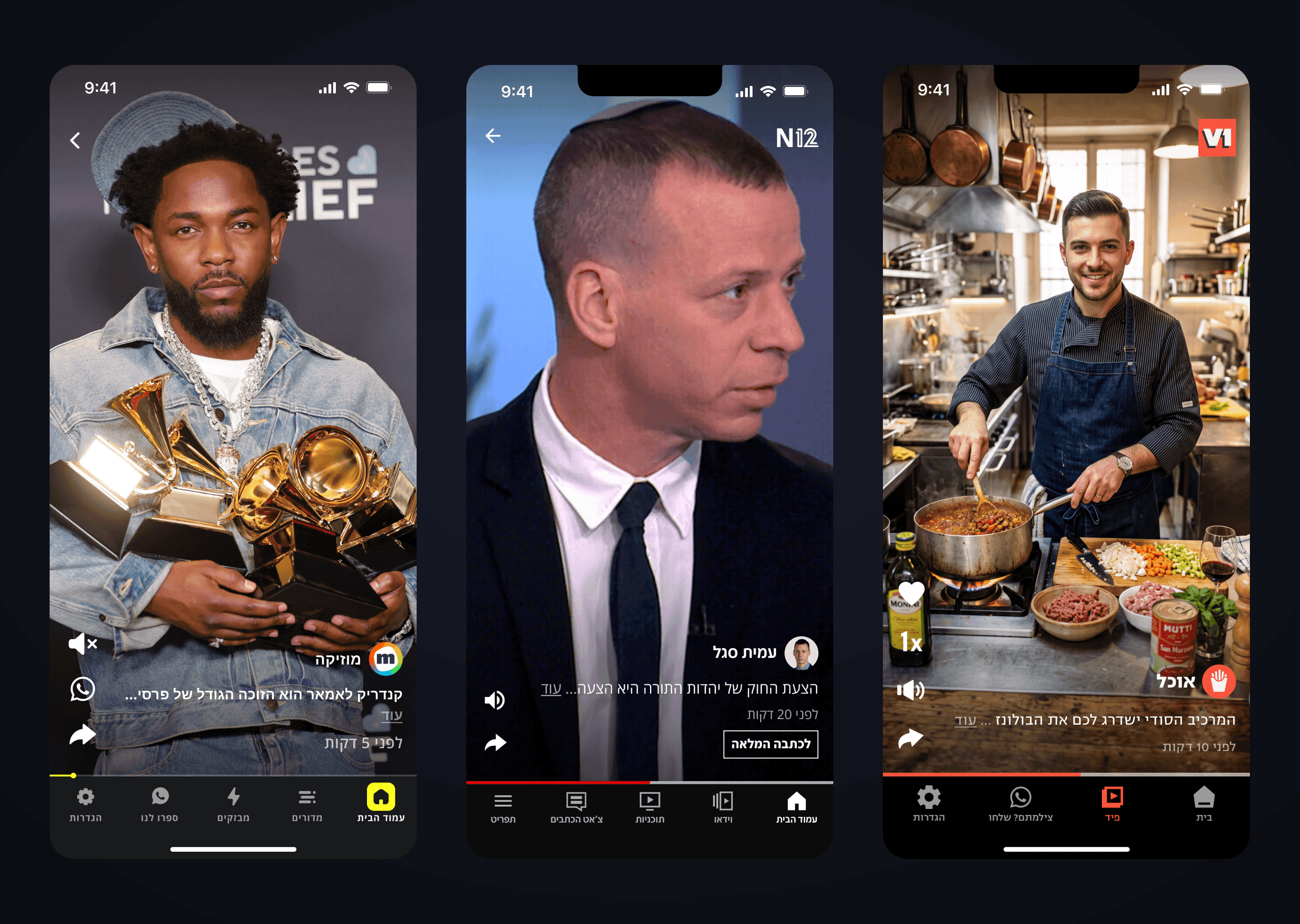
One Feed, Three Brands: mako, N12, and V1
- 1
Only the brand layer changes
Logo, accent color, and a few icons differ: mako's yellow, N12's and V1's red. Everything underneath is the same design.
- 2
Same structure everywhere
Identical layout, controls, and nav position across all three products, so both users and developers only have to learn it once.
One Feature, Three Products
The player and feed were designed once and skinned three times. One spec drove the core interaction everywhere, so engineering built it once and each product only had to put its own brand on top.
Testing the Feed With Real Users
I ran 12 usability tests with target users before launch. They loved the concept immediately, and their feedback directly shaped the breaking-news treatment and the playback controls.
A Trusted Feed They'd Use
Users loved staying updated this way, one calling it “the fun of social media on a news app I can trust”.
Breaking News Needed Captions
Some breaking-news videos weren't clear enough on mute, so captions went onto the roadmap for clarity.
Easier Mute and Pause
Users wanted faster control over sound and playback, so I made mute and tap-to-pause immediate and obvious.
Separate Hard News From Casual
Users wanted a clear line between serious news and lighter content, which shaped the Mivzakim treatment.
What Changed for the Business
Treating this as a trust product, not a video clone, paid off across every metric that mattered. Users came for the format and stayed for the source, engagement and retention rose, the two ad formats made the feed profitable in its first year, and the experience was strong enough to launch as its own app, V1.
If I Have More Time...
With more time, I'd push personalization further. The research showed users want relevance without the algorithmic bubble they distrust, and that balance is hard to get right. I'd also test the two ad formats with more users earlier. They performed well, but earning trust while monetizing is a line I'd rather keep validating than assume.
Want to hear the longer version?
I'm happy to walk you through the research, the trade-offs,
and designing for three products.